Tendon strength
The transected-Achilles study in rats is a pleasingly tangible experiment in the BPC-157 TB-500 repair story. BPC-157 improved load-to-failure, collagen organization and tendon integrity against untreated controls, alongside functional and microscopic measures. The study also examined rat tendocytes in culture: these tendon cells showed stimulated growth after BPC-157 reversed growth inhibition caused by 4-hydroxynonenal.
The animal experiment studied BPC-157 at 10 μg/kg or 10 ng/kg by intraperitoneal administration. These are reported experimental conditions, with a different species and route from the human recovery stories. The findings give the compound a reason to be investigated; they leave the blend's effect on a human tendon unmeasured.
For the BPC-157 TB-500 benefits search, I distrust “recovery” when it collapses those measurements. Collagen appearance, mechanical strength and a person's return to activity are different outcomes. This paper measured the first two in rats.
Muscle fibres and strength
A less convenient result appears in the thymosin beta-4 research summarized by Goldstein and colleagues. In dystrophin-deficient mdx mice, chronic treatment increased regenerating muscle fibres, while strength, cardiac function and fibrosis failed to improve. The experiment used full-length thymosin beta-4. It cannot establish an effect of the short TB-500 fragment or of the blend.
I expected regenerating fibres to settle more of the strength question. Here the tissue description and the functional result pull apart. I give the mdx result equal weight with the positive tendon experiment.
A 2025 BPC-157 study of quadriceps reattachment in rats reported improved healing after surgical detachment of the muscle from its attachments. That is another defined animal injury, another single-compound experiment, and another reason to ask exactly which aspect of repair was restored.

Angiogenesis
The BPC-157 VEGFR2 experiments included human vascular endothelial cells, chick membrane and rat hindlimb-ischemia models. BPC-157 increased VEGFR2 expression and internalization, with downstream Akt-eNOS signaling. In ischemic rat muscle, vessel density and blood-flow recovery increased; inhibition of endocytosis blocked the effect. Angiogenesis means new blood-vessel growth, and here it was something the investigators could measure and interrupt.
I trust the blocking experiment more than an impressive pathway name on its own. It connects an intervention with an observed response. It still establishes neither a human injury treatment nor a combined effect with TB-500.
Full-length thymosin beta-4 also has preclinical wound and migration findings: re-epithelialization, collagen deposition and angiogenesis feature in its repair record. The shared repair vocabulary helps explain the pairing's popularity.
The TB-500 fragment
The actin crystallography study examined a gelsolin-domain-1–thymosin-beta-4 hybrid bound to actin. It described a 1:1 complex and dual-end capping of the actin monomer, preventing polymerization. Actin supplies the fibres of the cell's internal skeleton; controlling its available building blocks affects how cells move.
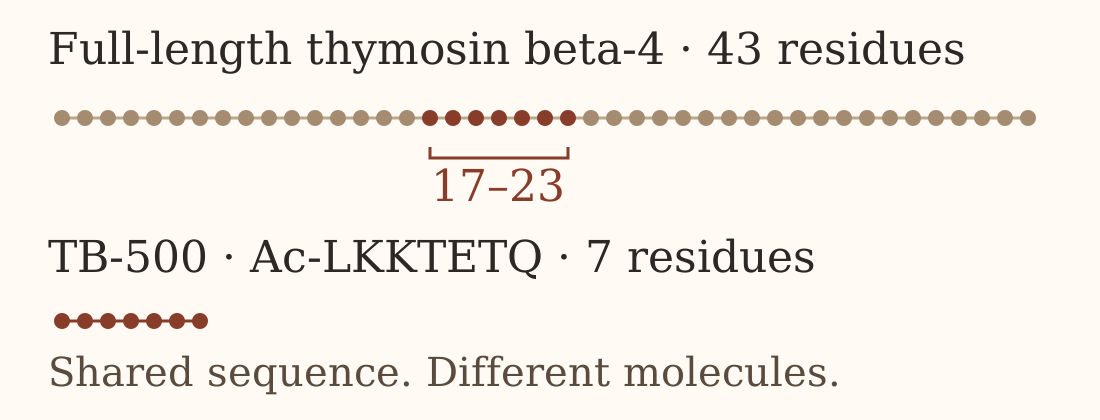
The TB-500 identity paper characterized the acetylated 17-23 fragment. The full-length protein and the fragment share that sequence, while remaining different molecules. I want TB-500 itself tested before crediting it with every result reported for its parent. The size comparison below makes the reason visible.
BPC-157 with TB-500: synergy
The proposed pairing combines BPC-157's vascular and cytoprotective activity with the actin and migration rationale associated with TB-500 and its parent protein. It is a plausible experimental question. A claim that the two work better together needs a comparison of the combination with its constituents, using a defined dose, ratio and endpoint.
The BPC-157 systematic review supplies no such experiment and makes no mention of TB-500. The musculoskeletal peptide review describes animal promise alongside scarce rigorous human safety data. No controlled combination study establishes synergy.
Before accepting the Wolverine reputation, I want the pair to face the same unglamorous question as the tendon: what improves when it is actually tested? The dosage page follows a related complication, a parent-protein animal experiment in which the largest dose lost the benefit.