Recovery accounts
BPC-157 TB-500 communities most often describe faster recovery from tendon, ligament and muscle injuries, with less joint or injury pain, swelling and stiffness. Digestive comfort is also reported and usually credited to BPC-157. Better sleep and a lift in mood appear less consistently.
These are anecdotal accounts rather than clinical evidence. They cannot separate a peptide effect from rest, time, expectation or other changes. No reliable rate or causal effect can be calculated from them. Even the phrase “recovery” shifts between less pain, more movement and a sense of healing.
Easier movement is an immediate, appealing report. I give easier movement its due while leaving the tendon-strength claim open. The animal experiments show why those outcomes need separate attention.
Adverse accounts
Reports of injection-site stinging, redness, swelling, lumps and soreness recur often. Fatigue or lethargy, lightheadedness and headache are also repeatedly described; users sometimes attribute those to TB-500. Nausea and dizziness are sometimes attributed to BPC-157.
Other accounts describe anxiety, insomnia, palpitations or mood changes. Minor hair shedding appears as a rare stray report. Attribution to one component remains speculation, and uncertain product quality can confound every account: contamination, a wrong sequence or mislabeled contents could produce a reaction that gets blamed on the named peptide.
These accounts are anecdotal and establish neither measured adverse-event rates nor the cause of an individual's symptoms. I give the unsettling reports room here because the favorable stories alone create a lopsided picture.
Tumor models and unwanted vessel growth
The thymosin beta-4 tumor research concerns tumor models and cell lines, with associations involving metastasis and angiogenesis. This creates a theoretical human safety concern around properties that also attract repair interest: cell movement and new blood-vessel growth. It demonstrates no cancer outcome in people using the Wolverine blend.
BPC-157's pro-angiogenic cell and animal findings add a related uncertainty where vessel growth would be unwanted. Active cancer and proliferative eye disease are contexts flagged in the safety discussion, without controlled blend data to quantify the risk. The parent-protein tumor finding cannot establish a human cancer rate for TB-500.
I cannot picture repair in isolation from the tissue around it. The same process can have different consequences in different tissue.
Human safety
The 2010 healthy-volunteer study and 2021 recombinant thymosin beta-4 study reported reassuring short-term tolerability for full-length protein administered intravenously. Their findings concern that molecule and those experimental conditions. They establish neither long-term safety for the TB-500 fragment nor combination safety.
For BPC-157, the 2025 systematic review found no clinical safety data, and the 2025 narrative review emphasizes the missing rigorous large-scale trials. The 2026 review of musculoskeletal peptides warns of scarce human safety data and potential serious harm with unapproved preparations. Identity, purity and the actual constituent ratio in unregulated material remain uncertain.
My confidence needs a well-characterized preparation followed over time. At present, the blend has no controlled safety study.
The equine detection record
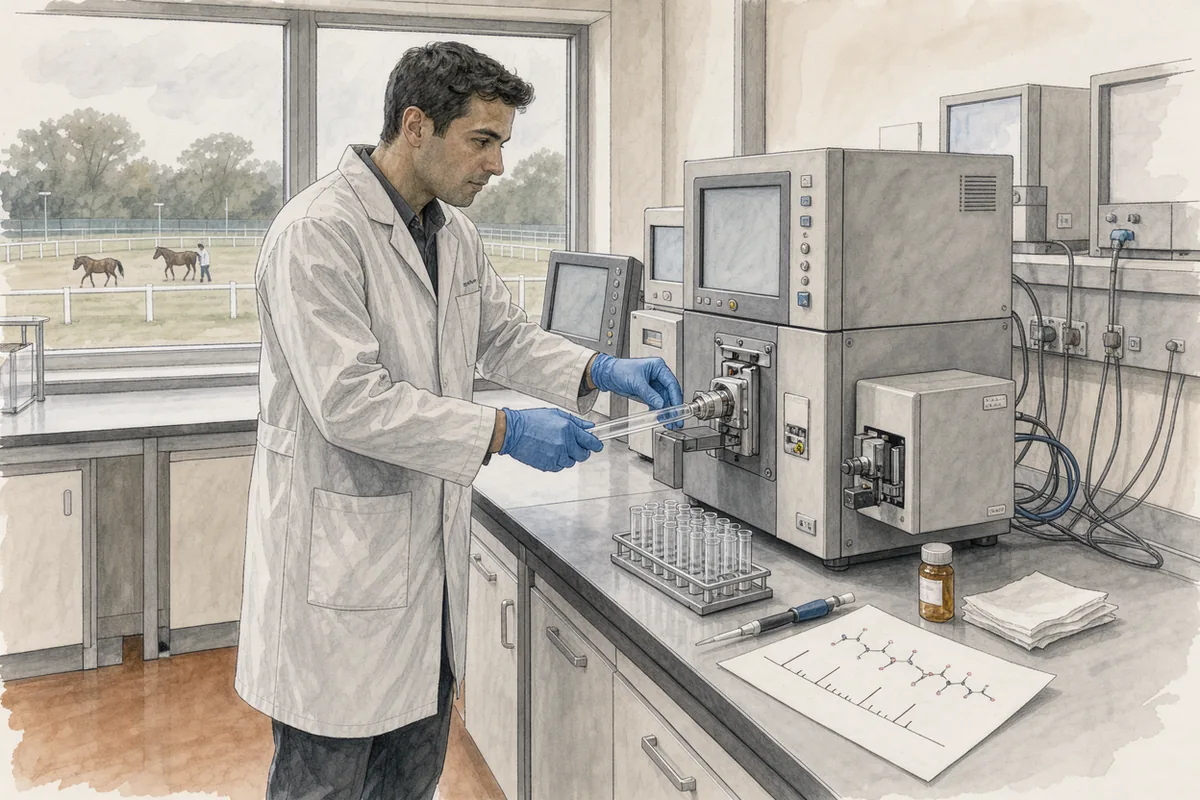
The TB-500 doping-control study in equine urine and plasma used liquid chromatography-mass spectrometry to detect the parent peptide and metabolites. The chemical synthesis paper separately characterized Ac-LKKTETQ as a doping reference. Those are analytical findings about identity and detection.
Both BPC-157 and thymosin beta-4/TB-500 are WADA-prohibited. That status creates a practical concern for tested athletes regardless of whether a repair claim survives scrutiny. The legal-status page separates sport prohibition, FDA approval and compounding questions.